
Going West: An Interview with Dave Kehr
Talking the holy trinity of Edward L. Cahn, Westerns, and Edward L. Cahn Westerns

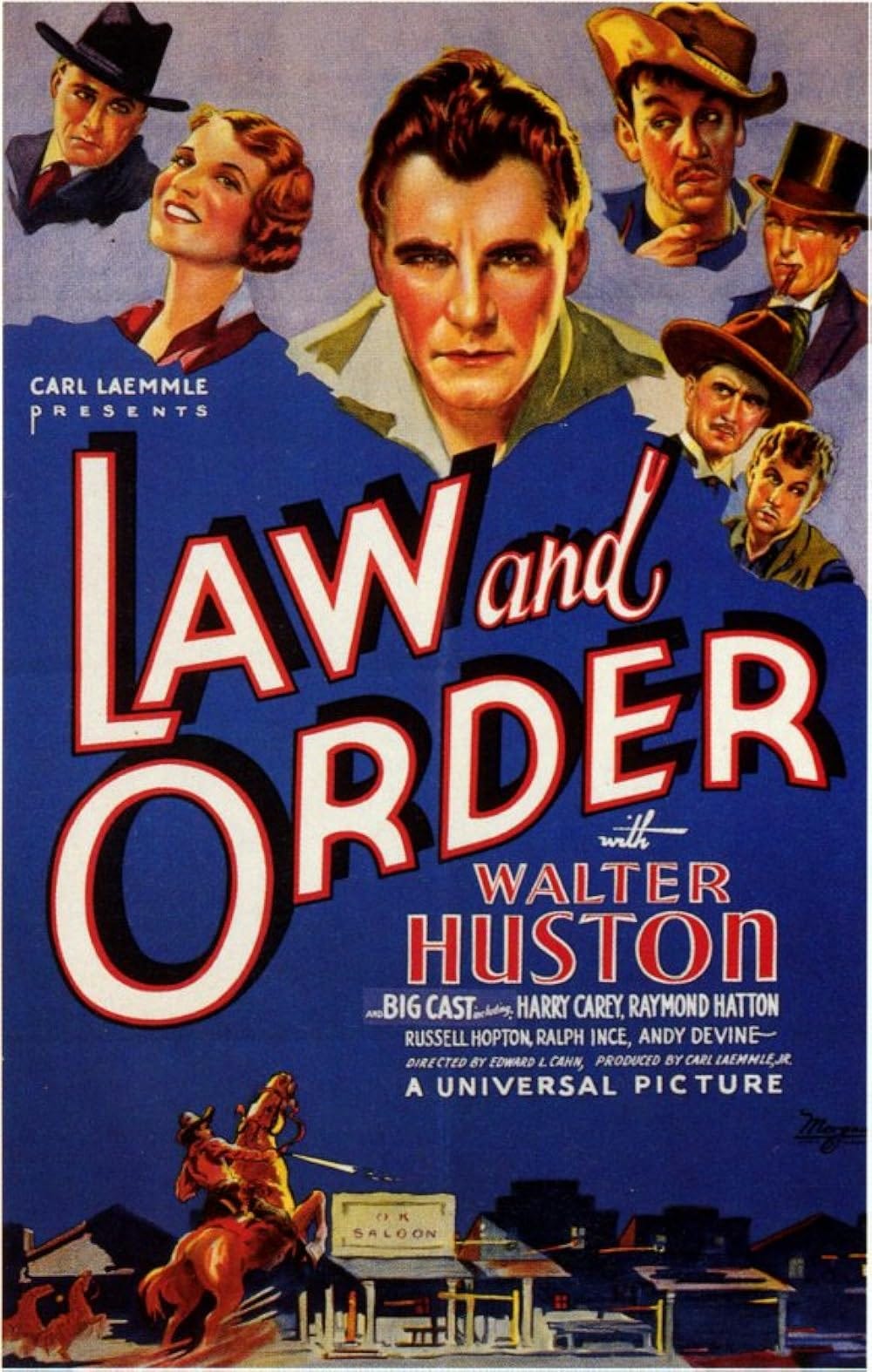
Forget The Odyssey: my summer blockbuster is the Universal Westerns series at the Museum of Modern Art, curated by Dave Kehr, that opens today and runs through July 3rd. The series spans the entire life cycle of the genre from 1917 to 1982, from John Ford silents that develop the genre’s open air language (Straight Shooting,), to interiorized no-budget Bs (Edgar G. Ulmer’s The Naked Dawn) and expansive Technicolor masterworks like Anthony Mann’s Bend of the River and The Far Country. Between such tentpoles are curiosities like Edward L. Cahn’s Law and Order (1932), the first filmed treatment of the Wyatt Earp story, directed by a young Edward L. Cahn, who would soon be bumped down from A pictures to short subjects and Poverty Row. I first encountered Cahn in Dave Kehr’s Film Comment column “Further Research”, so when he agreed to an interview about the series, I was eager to discuss Cahn’s career, Henry Nicolella’s new book about his work (My interview with Nicolella is here), and Universal’s influence on the development of the Western genre.
R. Emmet Sweeney: I talked to Henry Nicolella last night. He was given access to a lot of letters that Edward L. Cahn wrote to his wife when he was in England.
Dave Kehr: That’s the mystery period.
RES: He was really struggling. He went to England on a promise of making a film that never happened and then he couldn’t get back home. A string of broken promises.
DK: Is there insight as to why he left Universal?
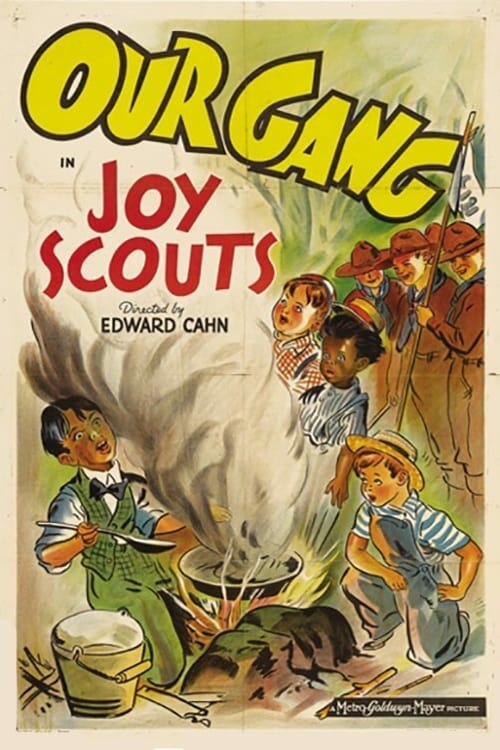
RES: There is no smoking gun. Nicolella says it was because of the negative reaction to Laughter in Hell (1933), and then he got the offer to make a film in England. It just got worse from there. And he was out of Hollywood for a year.
DK: That happened to so many people who went over and made one or two movies in England. When they came back, they found that they’re at the bottom of the heap again. Happened to Allan Dwan, happened to Raoul Walsh, happened to William Beaudine. And there’s an interview where Dwan says he wasn’t prepared for this. Hollywood completely forgot who he was. And when he came back to California, he had to start over again, making Bs at Fox, which is pretty similar to what Cahn ended up doing. Little Rascals is probably a little more humiliating than Claire Trevor films at Fox.
RES: One thing I didn’t know is that John Huston and Cahn were friends at that time. And they were bumming around England, and actually homeless for a little while.
DK: They must have met on Law and Order, for which John is credited as a writer. And there was that odd film that he directed in Britain. Racetrack picture, which is written by Huston [Death Drives Through (1935)]. So they must have made a couple bucks while they were there.
RES: Yes, here and there, but Cahn was certainly struggling. Nicolella quotes from John Huston’s autobiography, An Open Book (“Eddie was completely out, like Chaplin in City Lights, -the shirt was coming through the hole in his pants”).
DK: Huston was running away from a manslaughter charge. There was a drunk driving incident where he killed a pregnant woman. And it looks like Walter was able to make it more or less go away. But John had to clear out for a while. My understanding is that’s what Huston was doing in England. And my guess was that Cahn followed him on the prospect of getting some. film work there.
RES: I forget the name of the film [Blackshirt for “A and B Productions”], but there was a company that promised him a job that fell apart immediately. And then there was a string of similar situations.. There are a lot of very moving letters he’s writing to his wife. Trying to keep up a humorous facade, but he’s clearly struggling. She wants to come visit him and he doesn’t want her to come.
DK: He doesn’t want her to come. He must have really been out of it.
RES: Yes, pretty down and out. But to link this to the upcoming Western series at MoMA, we can loop back to Law and Order, which is a remarkable film in its own right. Although Henry also agreed that his later Westerns, he doesn’t seem to be very invested in.
DK: To me, those are the weakest of the Bs of his. He seems really unengaged in those. It’s just boring to him. He wants to get back to gangsters.
RES: Yeah, there’s always at least a moment in the gangster films of visual invention or these bracingly cynical moments. For the westerns, I’d have to go through them again.
DK: Yeah, I must have watched seven or eight of them and they all seem pretty tedious. But there’s so many! There are probably some good ones in there.
RES: Law and Order, on its own, could you talk about its inclusion in this series? How does it fit into the story you’re trying to tell about Westerns?
DK: The story is basically about how Universal developed. In the ‘20s they were a real powerhouse for regional theaters, cheap features for second rate independent theaters who weren’t affiliated with First National or Paramount. Pumping out these five-reel Westerns like crazy, and even a lot of two and three-reel Westerns. William Wyler came out of that. Edgar G. Ulmer supposedly made a few, although I’ve never been able to find any of them. And then when sound comes in, Carl Laemmle Jr. just ups everybody’s game. He gets no credit for this at all, but he was a very ambitious young man, quite well read, goes to Europe every summer, has very sophisticated friends, and suddenly the Universal product gets very hip. And I think Cahn is really a great example of that. Certainly Uncle Carl would never make Laughter in Hell or anything remotely resembling it. And then Junior kind of goes overboard and bankrupts the company in 1935 with James Whale. But yeah, Law and Order represents a real departure from the kind of stuff Universal was doing up till then. It’s a real A picture. Walter Huston was not cheap in those days. It looks like they built a lot of that famous Western street, which is still there in Burbank…with a slight incline, which I recognize over and over and over. And I think that was built for Law and Order. Just a guess. I can’t really identify it in anything earlier than that.
RES: The earliest film where you’ve seen that location?
DK: Yeah, with the usual caveat with any kind of film history. It’s the earliest one we know about. But as soon as you say it was the first, eight more turn up.
RES: Law and Order has that remarkable scene where Andy Devine is about to get hanged. They convince him that this is an honor because he’s the first to be hung in that town. It’s funny in a very dark way.
DK: Extremely, yeah.
RES: And there is the horrifying lynching scene in Laughter in Hell. These horrors keep emerging in his work. Even later, have you see Redhead which begins with an attempted suicide?
DK: Right. I haven’t seen very many of the Little Rascals films, but I assume they are not as sunny as the Hal Roach ones. They just don’t seem to be around. At least I haven’t turned up any of them. I’ve seen a bunch of the Crime Does Not Pay shorts and those clearly feed into his interests. And then a couple of those get expanded into features and then he’s sort of back on top, at least as a B-plus director. And then he decides to throw all that away and run off with Robert Kent and make these strange films for the next 15 years.
RES: Do you have any favorites from that period?
DK: Well, the gangster films are probably the best. I have to get out the list and look at the titles. They are weirdly personal. I mean, that whole trope of the voiceover narration in the past tense as we’re watching the action. It saps all sense of volition from the characters. Beyond destiny. You have absolutely no margin for freedom in this whole world. It’s all been determined. You have no choice. You’re just marching through these meaningless gestures and it feels pretty strong to me, particularly in the gangster films. That’s the best context for this sort of thing.
RES: Yeah, and I’m hoping the book spurs more interest in his work. You mentioned William Beaudine earlier, who is getting a retrospective at the New Beverly in Los Angeles.
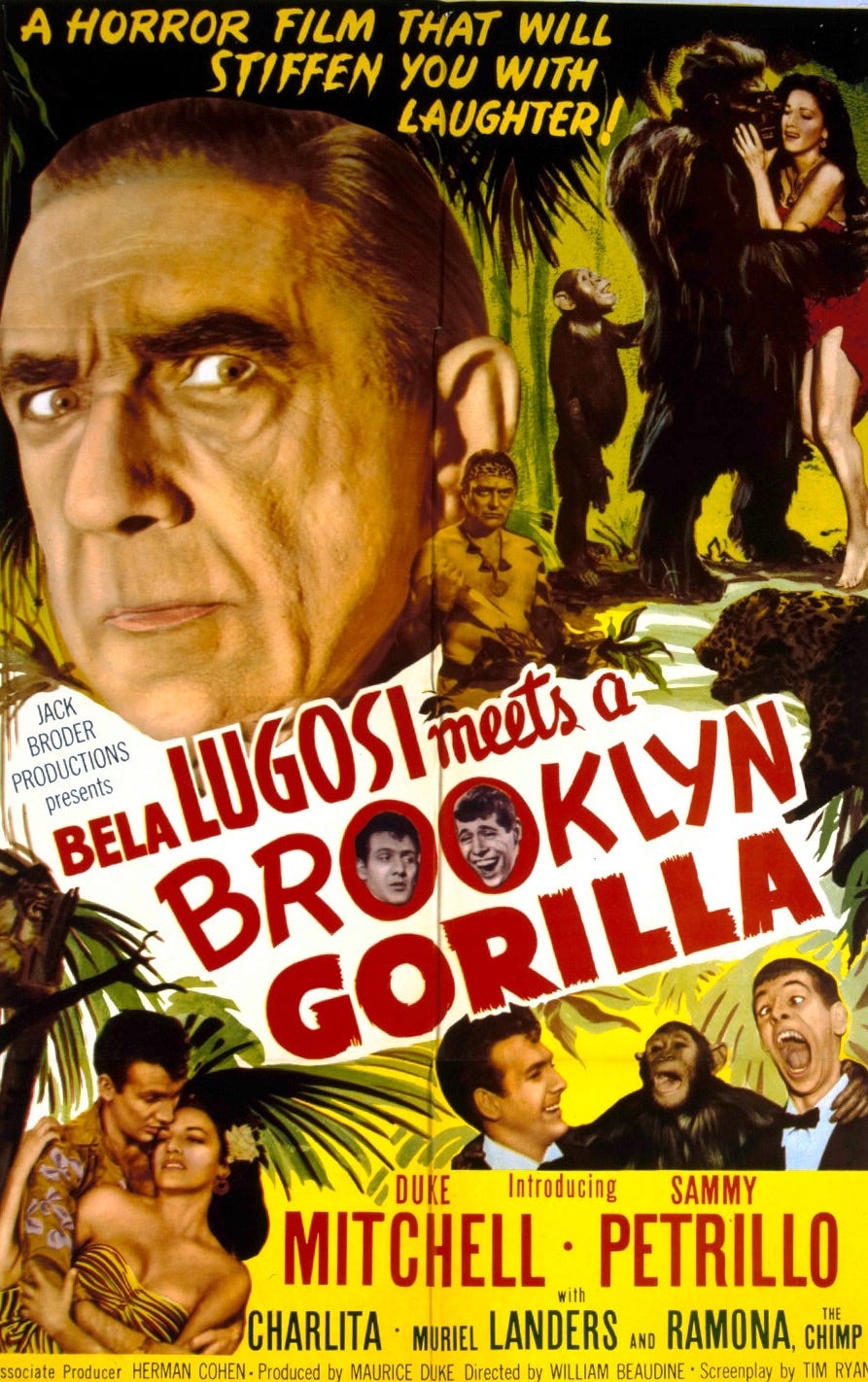
DK: He is getting that. Good for William Beaudine, but he’s getting it because people like making fun of Bela Lugosi Meets a Brooklyn Gorilla (1952). He’s a better director than that. Again I don’t know what happened to Beaudine’s career. Something to do with going to England but when he came back he was a nobody, just started scraping along in the most marginal films available. But clearly he was a skilled filmmaker, if you can make two movies a week, that’s evidence of competence if nothing else. And the films are watchable. Some of them are actually enjoyable. I wouldn’t say they were personal in the way that Eddie Cahn’s films are.
RES: I am no expert on William Beaudine.
DK: I’ve seen a bunch of them, he has a formula. He has a particular way of framing everything. He just doesn’t have to think about it. Just walk on the set and this is what he’s going to do, which I imagine is how he manages to make three Bowery Boys films a month for 10 years. But these marginal guys, they did have ambitions. And in the case of Cahn and Ulmer, you couldn’t keep them down. They had to keep making movies, which again, seems almost heroic to me, given the incredible career reversals these guys had.
RES: Henry interviews Cahn’s son, who says his dad was a family man. No drama at home Which was surprising to me. You would expect him to be a workaholic with no time for family.
DK: Glad he was happy.
RES: Well as far as we know. But I also wanted to hear more about the Western series. What was the impetus? Was this something you’ve been putting together for a long time?
DK: Well, I’ve been thinking about it for a while. Universal is a real pleasure to work with. They have a really good library and really good people in charge of making it available compared to nameless other studios. You have to pry stuff out of them. And even then you can get what I call the TCM 100. Trying to get anything more than that out of Warners or Disney is impossible. But Universal is extremely cooperative. They lend the library prints, which the other studios don’t want to do. They have a curiosity about the library that I do not feel from most of the studios.
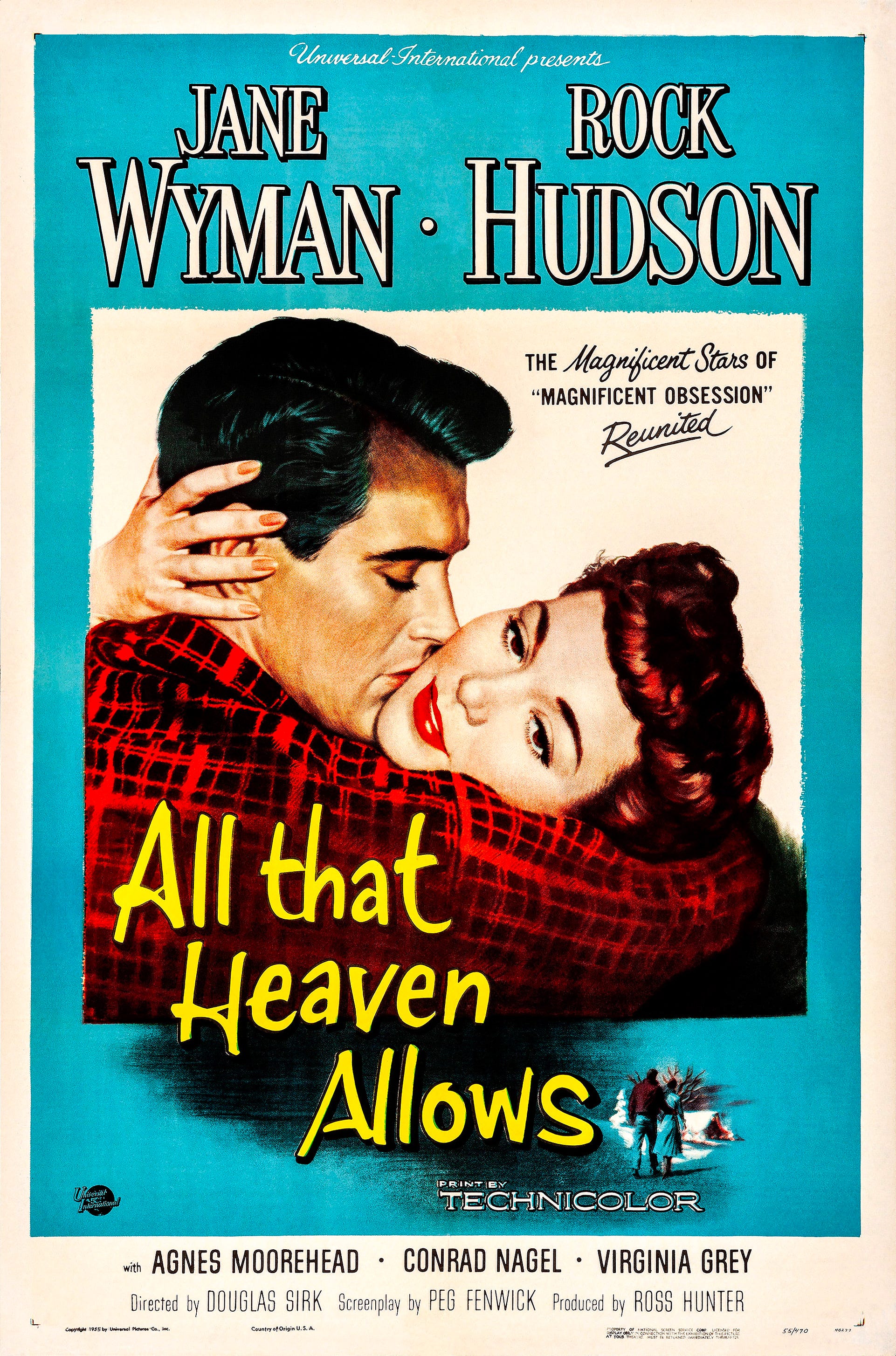
Universal has this incredibly good genre library. The Westerns were something that went straight through from the teens through the ‘70s and even a bit into the ‘80s. I was thinking about doing a couple other programs with them because the films are so accessible. Universal melodramas, I think, make a nice piece. This whole formula, which I think comes out of All That Heaven Allows (1955) is the ‘30s, ‘40s, female star up against the young stud, Rock Hudson mostly, but also Jeff Chandler and people like that.
RES: How to you cull the list down, what is the process as a programmer? You have an overwhelming number of Westerns to work off of. You’re not just looking at everything that has been restored. You mentioned library prints as well.
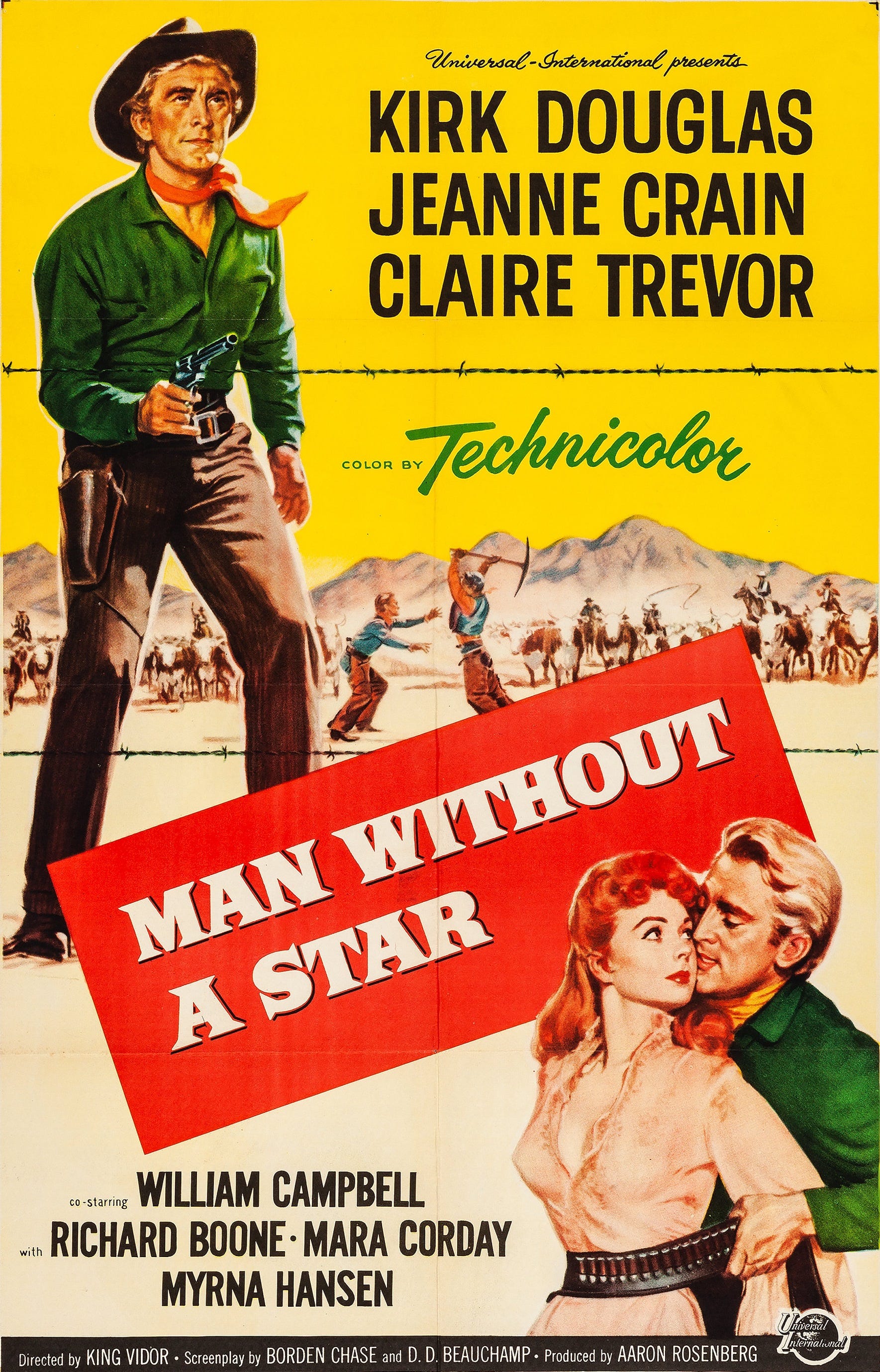
DK: Yeah, there’s half-a-dozen 35 millimeter prints, including Ulmer’s Naked Dawn (1955). I can’t believe that existed. Man Without a Star (1955), really important King Vidor film. Apparently it’s not been worked on at all, but we’re getting a 35mm print of that. The stuff that they have not digitized yet, they seem to be taking it seriously. They listen to people like us and do the work, which is not what I’m used to. Usually they listen to what got an Oscar nomination and they think those are the gems of the library.
For this series I drew up a wish list. They had sent an inventory of what they had on DCP. And I extrapolated from there, to see what else we could get. I think this probably represents every piece of film that has a horse in it that they had available at Universal. And of course, it could have been twice as big. There are big gaps - there is no Audie Murphy. I mean, that’s terrible. What a fascinating, weird character he was. No Joel McCrea. This guy named Jesse Hibbs, who I think is an interesting filmmaker. I would have liked to have stuck in a couple more of his, but they weren’t available. Anyway, I don’t want to complain too much. We did get an awful lot from them.
RES: You’re trying to get a balance of A and B. You want to capture the breadth of output.
DK: Yeah. I would have included some of the ‘30s Bs if they’d been available. Joe Lewis started his career with Universal Westerns in the ‘30s. Where he got that nickname “Wagon Wheel Joe” because he was always dropping in these kind of pretentious compositions out of nowhere. In the middle of these Kenny Baker Westerns, it doesn’t get much worse than that. But there are these gorgeous tracking shots, very well thought out.
Lewis is another guy like Cahn who started out as an editor, which seems to be a common thread with a lot of Poverty Row B directors is that as editors, they know what to shoot, know what they’re going to need to put the film together. So they don’t waste time with coverage and it’s boom, boom, boom. They’re done, they get there 10 minutes a day and everybody’s happy.
RES: Yeah, I wish Cahn’s daughter was still with us. She worked as his script girl and assistant on many of his AIP films. That would have provided actual insight because there are no interviews with him. He didn’t live long enough to get re-evaluated by the genre press…
DK: Famous Monsters or somebody. He dies in what, ‘63?
RES: Yeah. So there’s no record of him speaking about his own work, at least to any significant extent. It’s just mentions of him in the trades. But once he goes down the ladder, it’s silence. Which keeps the mystery. Other filmmakers, you can look up their progress more easily. But there’s still so many. blank spaces in his life and career.
DK: I mean, where were these things shown? The third feature on the bill at the drive-in? It’s like, right. I don’t know. What do you do with some of these things?
RES: What would you describe as Cahn’s personal touch? What are you looking for that jumps out when you’re watching one of his films?
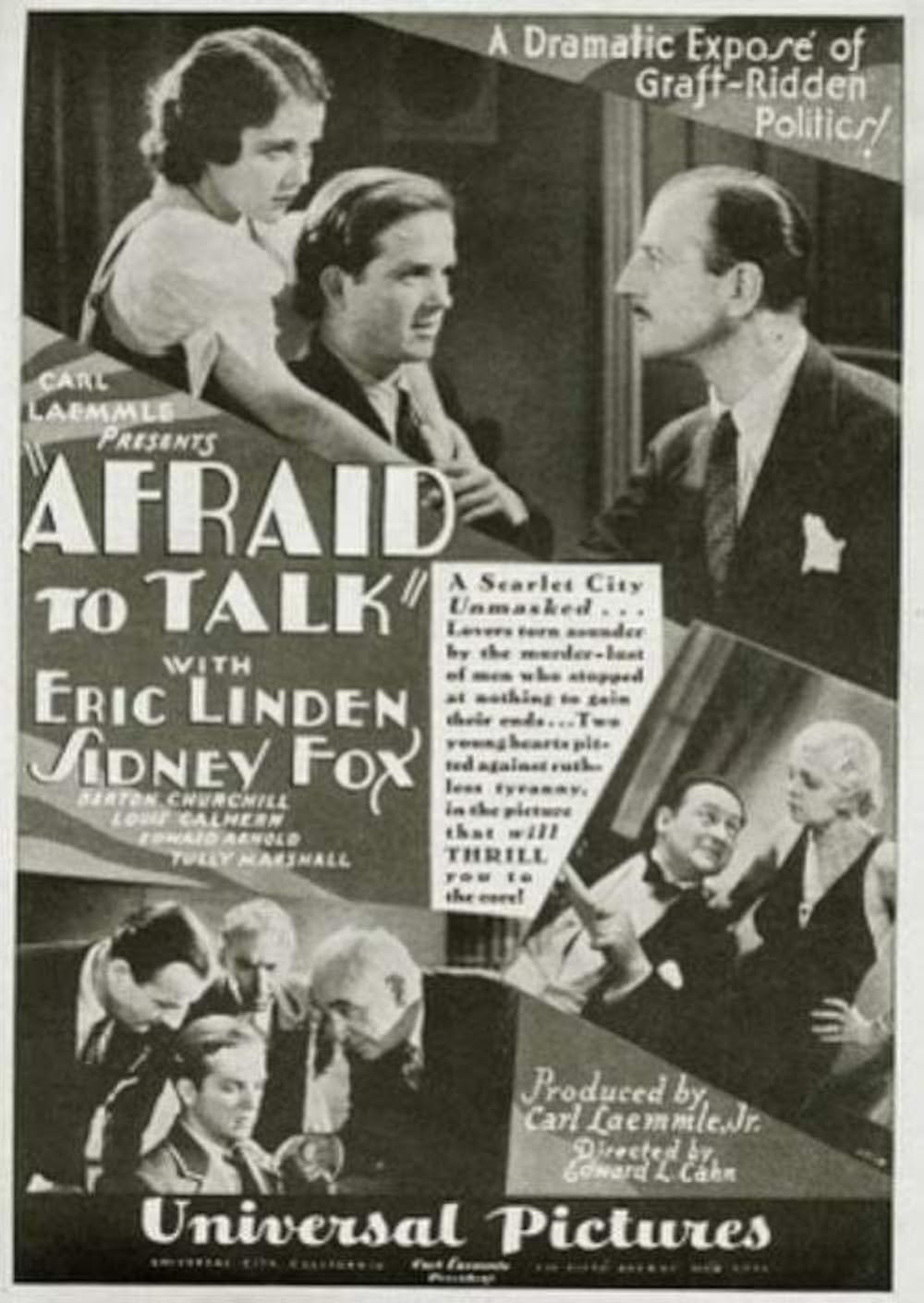
DK: The really bold framing. Quite unusual camera movements, often these elevated camera movements, where he’s on top of a crane and moving the camera, which is... Who’s doing that? Griffith? It’s really unusual. And the sense of ruthless speed that he developed as an editor. These things just wham along, and you get the sense of the characters getting caught up in forces that they cannot comprehend, certainly cannot control. Beautifully in Afraid to Talk (1932), which I hope Universal gets around to restoring one of these days. But just the way they chew up this kid and spit him out. And that’s the movie. That’s the only moral perspective you’re going to get here.
RES: I think that’s the one. If more people get to see that one, it will establish his reputation more than anything else.
DK: To me it’s the most violent and cynical of all the early ‘30s gangster films. Makes Scarface (1932) look pretty sentimental [laughs].
RES: Scarface is a love story in comparison.
DK: Yeah, it definitely has that element to it. Brother and sister, but what the hell.
RES: Hey, you take it where you can get it. If you could only recommend a couple of the Western series screenings, what would you pick?
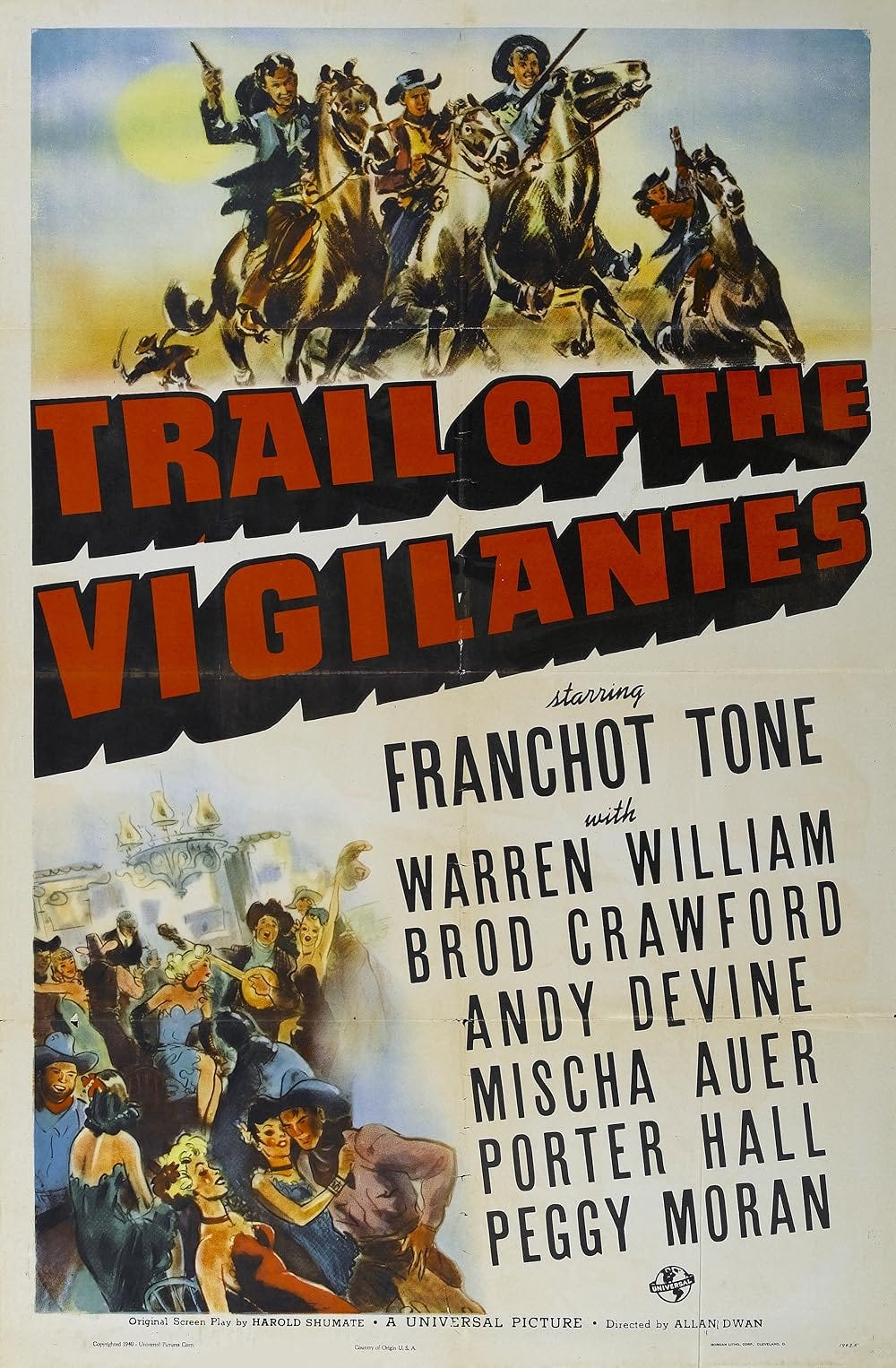
DK: Yeah, I mean, the rare titles, ones in 35mm, of course. So The Naked Dawn, Man Without a Star, The Trail of the Vigilantes (1940), which is very entertaining, a little Dwan.
RES: Yes, that movie is hilarious.
DK: Yeah. And I can’t believe they haven’t digitized it yet, but they’re sending us a print.
RES: Is that one of the Dwans where it was developed as a regular dramatic western and he decided to turn it into a comedy on the fly?
DK: That’s the rumor, yeah. I think he says that in the Bogdanovich interview. But it’s hard to know. The casting is strange. Franchot Tone. It’s quite a little picture and I’m sure nobody in the front office saw it and they slipped it out one day. The tent poles are magnificent. The Anthony Mann films, my God, if you haven’t seen those, that’s just unmissable. Those are absolute masterpieces of American cinema.
We’re doing this in coordination with the Narrow Margin magazine who to me represent a really solid kind of historical criticism that we haven’t seen in a while.
RES: I love how they provide context, including archival interviews along with the new critical essays. That’s extremely helpful when you’re examining these little known periods to the audience. And to myself, I should say. How did you hook up with them?
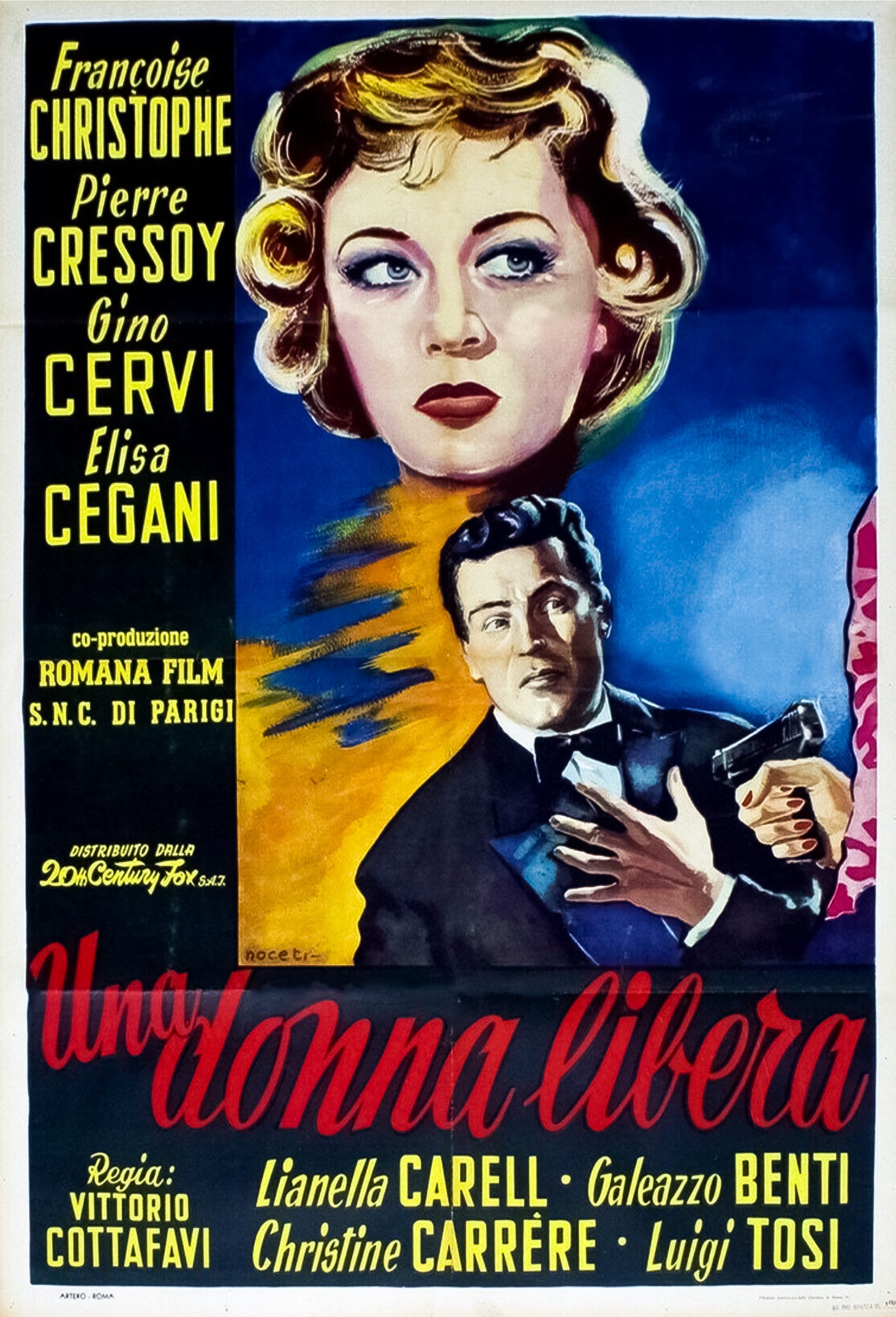
DK: They did that Vittorio Cottafavi series a couple years ago, and Cottafavi is somebody I’ve been interested in for a long time and there just aren’t enough prints to do anything. Getting stuff out of Italy is really tough, particularly genre stuff. They don’t exist or they’ve been taken over by these rights organizations and the screening fees are just gigantic. $1,000 for two screenings or something. Completely impractical. So that came up, I should maybe try this again. Maybe some more stuff is available. We could spread it out to include Bava and Riccardo Freda. One of those naturally talented filmmakers who could not take a bad shot to save his life, even though half of his films are completely incoherent. My God, visually they are so stunning.
RES: I’m not familiar!
DK: Oh, yeah, check some of those out. He did a lot of swashbucklers in the late ‘40s and ‘50s and trips into schlock in the ‘70s like everybody and those are not so good. A lot of that 40s stuff is pretty nice.
RES: Cottafavi is a name I’ve heard regularly but never dug into. I know he has a really passionate fan base in Europe.
DK: Yeah, he was one of the Présence Du Cinéma guys back with Pierre Rissient and that gang in the ‘50s. He was one of their standard bearers. There’s that funny Luc Moullet film The Seats of the Alcazar (1989), a romance between the Cahiers critic and the Positif critic. And there’s lots of Cottafavi discussion in that one [laughs].
RES: He made a lot of genre films, right?
DK: I was thinking of developing a whole piece on what are called the Peplum films in Europe, which are the sword and sorcery here. But they call them Peplum, which is the little leather skirts that the gladiators wore. Those were Peplums. It’s the European version of Westerns. It’s just a tremendous amount of material that can be treated in many, many different ways. You have these stock characters who get reinterpreted over and over again. Thinking about doing something for that in 2027 and seeing what else we can dig up print-wise by then.
RES: Oh, that would be exciting. For me it would be a whole new world.